

This story is part of a statewide partnership of 27 nonpartisan newsrooms and universities working to help Florida voters make informed decisions in the 2026 school board elections. Learn more about the Florida Elections Reporting Partnership.
Marion County Public Schools is facing a familiar challenge: improving student achievement.
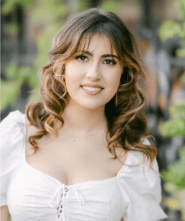
The district’s academic struggles have become a central issue in the District 5 race, with incumbent Sarah James and challengers Donald Barber and Ualthan Bigby offering different ideas for improving student performance.
Nearly half of Marion students performed below grade level in the most recent state language arts and math assessments, and the district received a C grade from the state this year under Florida’s revised grading scale.
It was one of 10 among Florida’s 67 school districts to receive a C grade this year, dropping from a B grade in the previous year. Despite the grade decline, the district reported a 46% increase in schools receiving A or B grades compared to the previous year.
In 2024, data from the National Assessment of Educational Progress showed Florida students performed similarly to the national public at the basic achievement level, while the state’s overall reading score was higher than the national public on average.
Candidates also offered differing views on managing and using the school district’s budget.
In July, school board members unanimously approved a tentative budget of $1.23 billion for the 2026-27 school year, a decrease from last year. A public hearing for the final budget will be held in September.
Although school board races in Florida are nonpartisan, the candidates have different political backgrounds. James and Barber are registered Republicans. Bigby is currently registered with no party affiliation though was previously a registered Democrat.
James, the 36-year-old incumbent, said she first ran in 2022 after the seat was vacated. She described her 2022 opponent, Taylor Smith, as “young and incredibly unqualified.”
Before joining the board, James had already spent years working in education, including roles as a teacher and administrator in Marion County. She also owns a private preschool in downtown Ocala called Kid City USA.
Now, as she seeks a second term, James said she is confident voters will support her.
James said her focus for a second term would remain on issues she has prioritized during her first term, such as improving student attendance and managing the district’s growth.
She added chronic absenteeism remains one of the district’s biggest obstacles, arguing that improving attendance is key to helping more students succeed academically.
“It’s really hard to improve student performance when 30% of them are not showing up to school chronically,” James said.
The state considers students chronically absent if they miss 10% or more of school days after being enrolled for at least 10 days.
Around 35% of Marion County students are classified as chronically absent, according to the most recently available state data. On average, just under 30% of all students in Florida are classified as chronically absent.
Beyond attendance, James said she hopes to improve how the district communicates budget information to parents as Marion County continues to grow.
She said managing that growth while balancing financial constraints has posed a challenge. James said previous boards did not pursue funding options such as sales tax and impact fees, forcing the district to borrow money to build new schools and address overcrowding in southwest Marion County.
Voters approved a half-cent sales tax for school construction in 2004. After that tax expired in 2009, the school board did not return another school sales tax referendum to voters until 2024, when voters approved a new 10-year half-cent surtax.
Education impact fees are one-time charges paid by developers on new residential construction to help cover the cost of building or expanding schools.
Marion County collected education impact fees from new development beginning in 2006, but the fees were suspended in 2011 on request of the school board because of the 2008 recession. The fees were not reinstated until 2024.
James faces two opponents: Donald Barber and Ualthan Bigby.
Barber, a 42-year-old first-time candidate with a background in local government, describes himself as a “country boy at heart.” He is a lifelong Marion County resident, though currently serves as Archer’s city manager and works as a business development manager for an engineering firm in Gainesville.
One of his goals if elected to the school board is to reduce spending, estimating he could cut between $20 million and $30 million from the school board’s budget to be used elsewhere.
Specifically, Barber said investments such as automatic light switches and switching to a state-backed school safety program could cut long-term costs. In 2022, the school board rejected Sheriff Billy Woods’ proposal to move the district’s Department of Safe Schools under the Marion County Sheriff’s Office.
Of his five children, Barber said his two eldest are homeschooled, while his youngest attends a Marion County elementary school to receive weekly speech therapy.
He said navigating his son’s enrollment for those services influenced his decision to run, describing the nearly 10-month process as a “nightmare.”
Barber said it took dozens of emails, phone calls and repeated applications before his son was approved for speech therapy.
The experience, he said, made him think about families who may not have the time or resources to navigate similar challenges. Combined with concerns about student achievement, Barber said it motivated him to seek a seat on the school board.
Barber himself was largely raised by a family friend in Ocklawaha after his parents separated and his mother experienced serious health problems. After leaving Marion County for college, he returned in 2007.
He said improving academic outcomes requires directing resources toward struggling students, including those with disabilities or limited support at home. Barber also wants to involve the broader community through mentorship and other support efforts to help the district’s lowest-performing students.
“We need to get our hands dirty and get involved,” he said.
The third candidate in the race, 39-year-old Ualthan Bigby, also pointed to student achievement as a major concern, but said improving outcomes will require addressing the underlying structural challenges facing the district.
He said the district should focus on supporting students who face the greatest barriers to success, including students with disabilities and those living in poverty, while also addressing teacher retention and working conditions.
Before entering the race, Bigby said he spent years preparing for leadership roles within the district, including serving as a dean and completing the requirements to become an assistant principal.
He said he ultimately decided to run for school board because he believes the district needs a different approach to addressing its challenges.
One of Bigby’s priorities would be improving communication between the district and the people it serves. He said teachers, parents and students need stronger feedback systems where their concerns are heard and acted on.
“Our feedback systems are lip service,” Bigby said. “The people who know what the problem is are trying to tell you what the problem is, and you don’t care to hear it.”
As far as funding goes, Bigby criticized the district’s use of site-based budgeting, arguing that tying resources too closely to enrollment can leave struggling schools with fewer resources when they need more support.
He said the district’s challenges cannot be solved by simply waiting for additional state or federal funding.
While acknowledging those limitations, he said leaders must also examine how existing resources are prioritized, pointing to recent investments in new school buildings while some schools face staffing shortages.
The candidates also bring different personal and professional histories to the race.
Bigby was arrested in 2013 during a traffic stop on a charge of marijuana possession while he was a college student. According to the arrest report, officers said a search of the vehicle found marijuana after Bigby initially told them he did not have any.
Students and teachers in Marion County Public Schools are subject to a zero-tolerance policy for drugs and alcohol, including marijuana.
The charges were later dropped after Bigby agreed in February 2013 to complete the terms of a deferred prosecution agreement, according to court records. The agreement required him to pay $75 to a charity, complete 10 hours of community service, pay $50 in court fees and complete a substance abuse class.
Court records do not show Bigby completed those requirements.
Bigby said the decision he made as a young adult was a mistake, but said the experience gave him insight into the challenges some students face. He said he has since obtained a medical marijuana card.
“You need educators who have walked that life,” he said about the arrest. “I can see when a kid is starting to walk that life and turn them around.”
James has also faced scrutiny during her time on the school board. She was the subject of multiple ethics complaints filed by fellow board member Nancy Thrower in 2024.
The Florida Commission on Ethics reviewed one complaint and found no probable cause to warrant further investigation, while declining to take up two others.
The reviewed complaint alleged James used her position as a board member to benefit her private preschool business by asking district staff to print and post a flyer for a bus driver position.
James said the complaints should not be a concern for voters.
“If the voters don’t like the ethics board, they should probably talk to the governor,” she said. “I put my head on my pillow every night, and I sleep soundly knowing that I’ve made the best decisions for Marion County.”
The incumbent also came under scrutiny in 2024 over the district’s procurement process for a new Marion County high school construction contract.
During the final phase of the selection process, a committee of seven interviewed three construction firms: Ausley Construction, Charles Perry and Wharton-Smith.
Wharton-Smith received the highest score and was initially selected for the contract.
However, James expressed concerns about the fairness and integrity of the original procurement process. Superintendent Diane Gullet decided to redo the interviews with a different committee, but using the same process after seeking legal advice.
An independent investigation commissioned by the district, and conducted by an outside law firm, later found that James attempted to influence the process by pressuring Gullet to change the process in a way that would have benefitted Ausley Construction during a May 2024 phone call.
That investigation, by lawyers with GrayRobinson, found no evidence James successfully manipulated the process, and it said allegations that Ausley campaign contributions to James influenced her actions were unsubstantiated.
It also found connections between nearly all committee members and to either Ausley Construction or Wharton-Smith — not just James.
According to campaign finance records, Ausley Construction CEO Ken Ausley was among James’ campaign donors, contributing the maximum allowable amount of $1,000 to her campaign. Ausley also contributed to her 2022 campaign.
James said Ausley was not a top donor, but one of many and noted that Ausley has contributed to other local campaigns as well.
She was on the procurement committee for the Elementary ‘X’ project, which was ultimately awarded to Ausley Construction, according to the GrayRobinson investigation.
The incumbent candidate has received over $45,000 in campaign contributions. Several $1,000 donations came from other developers and construction companies, including West Oak Developers and Stentiford Construction Services.
“Those construction companies are also the same guys who support 90% of the nonprofits in our town,” James said. “They believe in making sure the right people are in office to ensure that proper policy and financial decisions get made at the top level for the school board.”
Barber has faced scrutiny over his professional record too, including workplace complaints while he was at Williston’s utilities department.
A fifteen-page report by the law firm Douglas & Douglas described a longstanding conflict in the department called “the great divide.” It was between Utilities Director Jonathen Bishop and Barber, who then served as Williston’s water, wastewater, gas and fiber administrator.
Employees were largely aligned with either “Team Donald” or “Team Jonathen,” and described the department as marked by distrust and internal conflict, the investigation said.
It said the division began when the city manager limited Barber’s oversight. Though Bishop was the utilities director, it was widely believed by employees Barber did the majority of the work for the utilities department. So, the change was not well received.
Barber has filed his own hostile workplace complaint against several Williston officials. Barber has also received complaints against himself, at least one for speaking condescendingly at a city meeting, according to the report.
While the investigator noted that many employees viewed Barber as knowledgeable and effective, others described his management style as strict and difficult.
“There’s nothing in the report that I’m ashamed of,” Barber said. “ I’m an open book. I have nothing to hide.”
According to campaign finance records, Barber also received a campaign donation from an ex-Marion County official, Kyle Drummer, accused in a lawsuit of secretly recording a couple in their hotel room.
Barber said he is a friend of Drummer and with the plaintiffs in the lawsuit.
“It’s a question of who do you believe,” Barber said. “And what my opinion has been, is, I don’t believe either one of them. But I’m friends with both of them.”
Voters will decide Aug. 18 which candidate they believe is best equipped to guide the district as it works to improve student achievement and oversee a more than billion budget. If no candidate wins a majority, the top two candidates will move to a November runoff.
District 5 covers most of northern Marion County and serves 12 public schools, including East Marion High School and Anthony Elementary.
This story was produced in partnership with nonpartisan news organizations and universities across the state working to provide information about the 2026 elections. Learn more about the Florida Elections Reporting Partnership at floridaelections.org.

